Data centers: powering the digital world
From cloud computing and artificial intelligence to streaming, e-commerce and critical public services, data centers sit at the heart of today’s digital economy. Every transaction, search query and AI driven insight relies on highly resilient data center infrastructure running around the clock.
But as demand accelerates, the data center industry is under growing pressure. Operators must scale fast, control costs, meet strict service level agreements and demonstrate sustainability, all while ensuring zero unplanned downtime. Managing a modern data center has never been more complex.
This page explores what a data center is, the challenges data center operators face today, how the Planon Data Centers Solution supports reliable and efficient operations, and what the future of data centers looks like.
What is a data center?
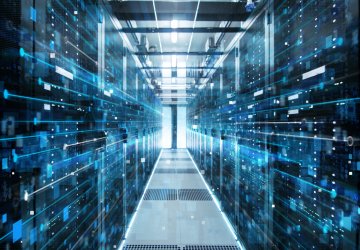
A data center is a specialized facility designed to house data servers, storage systems and network infrastructure that process, store and distribute digital information. In simple terms, it is where data lives and flows.
So, what does a data center look like? Typically, a data center building has:
- Servers installed in secure racks within data halls.
- Power infrastructure including substations, Uninterruptible Power Supply/Systems (UPS) and backup generators.
- Cooling systems to keep stable temperature and humidity.
- Network infrastructure and network security systems.
- Monitoring, control, and safety systems supporting 24/7 operations.
Data center locations are chosen carefully, balancing access to power, connectivity, land availability, environmental conditions and regulatory requirements. Increasingly, data center site choice is influenced by energy availability and sustainability considerations.
There are several types of data centers, including enterprise owned facilities, hyperscale data centers, and colocation data centers where multiple data center users share space and services. Colocation data center and data center colocation services continue to grow rapidly, driven by cloud adoption and the need for flexible capacity.
Inside a modern data center
Behind the rows of servers lies a highly engineered environment. A modern data center infrastructure solution integrates physical, digital and operational layers.
Key components include:
| Power systems |
Medium and low voltage distribution, generators, UPS and power monitoring |
| Cooling technologies |
From traditional air cooling to advanced data centre liquid cooling for high density and AI workloads |
| IT and network equipment |
Data center servers, storage platforms and data center databases |
| Monitoring and control |
Data center monitoring tools offering real time insight into asset health, power usage and environmental conditions |
As data volumes grow and AI in data centers becomes mainstream, density levels increase and cooling, power and monitoring requirements become more demanding.
Key challenges in the data center industry
The data center business is evolving fast, and operators face a unique combination of operational, technical and commercial challenges. Addressing these challenges requires more than incremental improvements. It calls for disciplined best practices that can be applied consistently across mission-critical environments.
Uptime and operational resilience: Downtime is not an option. Data centers must deliver continuous availability while managing complex mechanical and electrical assets. Human error, fragmented systems and manual processes increase risk, particularly in large or distributed portfolios.
Cost control and efficiency: Energy, maintenance and asset lifecycle costs account for a significant share of operating expenditure. Without integrated data center monitoring tools and structured processes, it is difficult to optimize maintenance, reduce energy waste or accurately distribute costs.
Sustainability and compliance: Sustainability is a board level priority. Data center operators must track energy, water and carbon metrics while meeting regulatory and reporting requirements. Yet many operators lack consistent visibility across their assets and sites.
Complexity of colocation and multi tenant environments: In colocation data center environments, operators must balance internal operations with external customer expectations. Managing access, Service Level Agreements (SLAs), reporting, and transparency for multiple tenants adds another layer of complexity.
Skills and scalability: As portfolios expand, organisations struggle to scale operations without increasing headcount. The need for standardised processes, automation and reliable data becomes critical.
How can data center operators address these challenges?
To manage growing complexity, data center operators must adopt proven best practices that support reliable, efficient and scalable data centre operations across single sites and global portfolios.
Maintaining data center uptime requires disciplined operational control. Best practice involves defining and enforcing Standard Operating Procedures (SOPs), Method of Procedures (MOPs) and Emergency Operating Procedures (EOPs) to reduce human error and operational risk. A structured maintenance strategy, covering preventive, predictive, corrective and condition-based maintenance, is essential to protect critical power, cooling and building infrastructure while meeting safety and industry standards.
Data center operating costs are largely driven by energy consumption, maintenance activities, workforce utilization and downtime risk. Leading operators focus on improving visibility into these cost drivers by aligning asset condition, maintenance execution and operational performance data. This enables more accurate planning, better prioritization of work and continuous improvement in efficiency.
Data center sustainability is now a core operational requirement. Best practice includes monitoring energy use, cooling efficiency and carbon impact at asset and site level, and using this insight to support regulatory compliance and sustainability reporting. Consistent, auditable data is critical for improving energy efficiency and reducing environmental impact over time.
Colocation data centers introduce additional operational and contractual complexity. Operators must maintain clear oversight of customer agreements, service levels and shared infrastructure, while ensuring transparency and consistent service delivery across multiple tenants. Linking operational activities to contractual obligations is essential for effective colocation management.
As data center portfolios expand, organizations must scale operations without increasing risk or headcount. Industry best practice focuses on standardizing processes across sites, reducing reliance on individual expertise and improving task execution through clear workflows and performance management. This supports consistent operations and long-term scalability.
While these best practices define how modern data centers should operate, applying them consistently across mission-critical environments is challenging. Reliable uptime, cost control, sustainability and scalability depend on having a strong data center operations foundation that connects assets, maintenance activities, operational data and teams. Dedicated data center operations management solutions play a key role in turning best practice into day-to-day execution. This operational foundation is also essential as data centers adapt to recent technologies and increasing AI-driven capacity demand.
The role of AI in data centers
AI in data centers is reshaping demand, design and operations. High performance computing and data center AI workloads drive higher power densities, new cooling approaches and more complex operational requirements.
At the same time, AI-driven analytics open new opportunities for predictive maintenance, anomaly detection and smarter resource planning. Planon provides the operational foundation needed to support these innovations, ensuring that AI adoption does not come at the expense of control or compliance.
Built on deep data center expertise
Operating a data center requires deep understanding of critical infrastructure, up-time driven processes and the realities of mission critical operations.
Planon for Data Centers is developed in close collaboration with Schneider Electric, a global leader in data center power, cooling and digital infrastructure. This partnership brings together complementary strengths.
Schneider Electric contributes decades of expertise in electrical and mechanical systems, energy management and critical infrastructure operations. Planon adds a proven platform for structured maintenance, asset lifecycle management and operational workflows.
The result is a solution that does not compete with building management or monitoring systems but builds on them. Infrastructure data and alarms are translated into controlled actions, maintenance processes and audit ready operations.
For data center operators, this means greater confidence, faster response and the ability to scale operations without increasing risk.
The future of data centers
The future of data centers will be defined by scale, sustainability and intelligence.
Key trends include:
- Continued growth of colocation data centers and data center colocation services
- Increased use of AI in data centers, driving higher density and new cooling models
- Greater focus on energy efficiency, power monitoring and carbon transparency
- More automation and standardization to support global portfolios
As the data center industry evolves, success will depend on the ability to manage complexity without adding risk. Integrated platforms that connect infrastructure, operations and people will play a vital role.
Planon for Data Centers
Planon for Data Centers is an integrated solution purpose-built for mission-critical environments. It combines asset management, maintenance, workflows and operational data into a single, connected platform, with a CMMS designed specifically for data center operations.
By connecting people, processes and assets, Planon helps operators safeguard uptime, standardize operations, improve visibility, control costs and support sustainability across single sites or global portfolios.
Building resilient, future ready data centers
Whether you run a single data center or a global portfolio, Planon helps you move from reactive management to structured, data driven operations. By combining deep domain expertise with a flexible, proven platform, Planon supports reliable operations today while preparing your organization for the future of data centers. Discover how Planon can support your managed data center strategy and help you stay in control as the data center business continues to evolve.
Learn more about Data Center Facilities Management Software